Trafficking means the illegal trade, transport, or exploitation of people, animals, or goods, usually for profit and often involving force, fraud, or coercion. These are made in many forms like Human trafficking, Drug Trafficking, and animal or wildlife trafficking.
Image Credit to UNODC
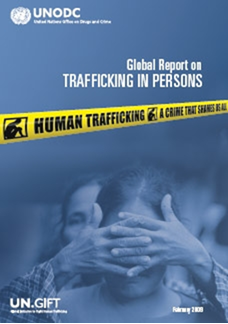
Human Trafficking
The United Nations Office on Drugs and Crime has consistently indicated that human trafficking operates on a global scale, even as several governments continue to downplay or deny its extent. Among its various forms, sexual exploitation remains the most dominant, accounting for nearly 79% of all recorded cases. Notably, women are not only victims but also play a disproportionately significant role as traffickers in certain regions.
Labor trafficking constitutes the second major category, contributing around 18% of cases. This often occurs under ambiguous conditions, where individuals may be moved either with partial consent or under deception, making forced labor difficult to conclusively identify in many instances. Child trafficking, estimated at roughly 20%, frequently involves cross-border movement, with a substantial number of victims originating from West Africa.
The case of Jeffrey Epstein stands as one of the most high-profile illustrations of organized sexual exploitation networks. It revealed how influential individuals were implicated in structured systems of commercial sexual abuse, with Epstein reportedly trafficking thousands of young girls and women across international boundaries, as highlighted in UN reports.
In India, the scale of exploitation is equally alarming. According to the Global Slavery Index, an estimated 2.7 to 3 million individuals are trapped in systems of commercial sexual exploitation. A striking 90% of such trafficking occurs within domestic borders rather than across them. Further, data from the National Crime Records Bureau suggests that a child goes missing every eight minutes in India. These disappearances occur from homes, schools, marketplaces, and playgrounds, often feeding into organized trafficking networks. Victims are subsequently exploited for labor, forced criminality, or commercial sexual activities. Weak enforcement mechanisms and systemic gaps in law implementation, as noted in studies such as those by Harlan (2012), continue to enable these networks to operate with alarming efficiency.
About the Author